WHY IS THE NAME OF A PROFESSION BEING ERASED IN CHILD-FRIENDLY JUSTICE BY EU PROJECTS?
WHY IS THE NAME OF A PROFESSION BEING ERASED IN CHILD-FRIENDLY JUSTICE BY EU PROJECTS?
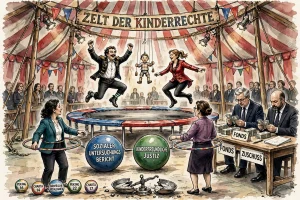
International law entrusts the protection of the child within the justice system, the preparation of social investigation reports, and case management to the “Social Worker” (Sosyal Hizmet Uzmanı / Sosyal Çalışmacı) profession. This profession—central to social protection and social justice, including the protection of children—requires specialised university education, ethical principles, and universal intervention methods. The individual who understands the child’s developmental language, builds a bridge between the child and the justice system in judicial proceedings, and defends the child’s rights is this expert.
However, in the process ongoing in Turkey since 2005, EU-funded projects and administrative regulations have contributed to the systematic transformation of this universal title into ambiguous categories such as “social service personnel” (sosyal hizmetli / Sozialdienstpersonal), “social personnel” (sosyal görevli / Sozialpersonal), “social work officer”, or “judicial support officer.” (Note: In everyday Turkish, “sosyal hizmetli” and “sosyal görevli” carry a pejorative and dequalifying connotation, implying unskilled or semi-skilled support staff rather than licensed professionals. See Explanatory Notes, Section 2.)
But why is this name being erased—by EU projects as well? By whom, and at what cost?
1. Not a mere translation error, but a systematic choice:
In the English, French, and German texts of the Council of Europe’s Child-Friendly Justice Guidelines (2010), the concept “Social Worker” is preserved identically in 8 different places. Yet in the Turkish translation published under an EU and Council of Europe-supported project, the same concept is distorted 6 times as “Sosyal Hizmetli” and 2 times as “Sosyal Görevli.” Even more strikingly, the authors of the training book confessed this choice in their own footnotes, stating “there is no unity of concept.” This is not an isolated “translation error” but a deliberate choice at institutional level, carried out through EU projects.
2. A universal problem: not specific to Turkey:
This is not merely an implementation error in Turkey. In the e-library prepared under the Council of Europe’s own project (Improving the Effectiveness of Family Courts), Decision 1967(16) is included, while Decisions 1991(16), 2002(1), and 2011(12)—which deepen the human rights dimension and professional specialisation of the profession—are systematically excluded. In other words, international institutions quietly prune the very standards they protect in their own countries when implementing EU-funded projects elsewhere. This is a universal problem of Europe—and when children’s rights are at stake, such a “double standard” is unacceptable.
3. A picture with a heavy cost:
Because there is no separate criminal code or specialised judiciary for children in Turkey, more than one million children have entered the justice system since 2005. Approximately 5,000 of them have been detained, 300,000 child victims of crime were not reached, and thousands of children were left unprotected by reports prepared by unauthorised persons. The biggest factor in this picture is the exclusion of social services and justice through legal regulations.
4. The contradiction of international institutions and “misuse of funds”:
UNICEF, the Council of Europe, and the EU—actors in the justice and social services practices carried out under the Turkish Criminal Code and the Child Protection Law since 2005—have, through the ÇABA (Union of Turkish Bar Associations), YÖN (Ministry of Justice), Judicial Support, and Protective Family projects prepared under their material contribution and supervision, allowed this erroneous approach—one that obstructs children’s rights—to continue contributing to the preservation of the existing status quo. Yet the transformation by these same international institutions of the “Social Worker” standard they protect in their own countries into administrative categories such as “social service personnel” or “social personnel” in the projects they fund in Turkey raises suspicions of double standards and misuse of funds.
5. But why?
Because the “umbrella personnel category” (torba kadro) application (Social Work Officer)—foregrounded in local legislation and aimed at preserving the status quo—has been prioritised over international standards (Beijing Rules, IFSW 2018 Ethical Principles, European Social Charter). This choice has been made at the expense of usurping the child’s right to be protected by a qualified expert.
Conclusion:
This is a violation of children’s right to quality services, their human rights, and their social rights.
The main report published following this foreword sets out all dimensions in detail in light of the 2010-2013-2022 chronology, the 8-point comparative translation analysis, the training book’s own confessions, the e-library example (with ISBN-level bibliographic evidence), the IFSW 2018 Ethical Principles, the European Social Charter, the EU Charter of Fundamental Rights, and the Beijing Rules; it also presents an action plan directed at all international authorities, from the UN Committee on the Rights of the Child to the European Court of Auditors.
Children’s rights are too vital to be sacrificed to translation games and administrative umbrella personnel categories.
For justice and children’s rights.
SHU Nihat Tarımeri
Child Protection Türkiye Group Coordinator
Member of the SHUDER Children’s Commission
Translated by the DeepSeek Team.